
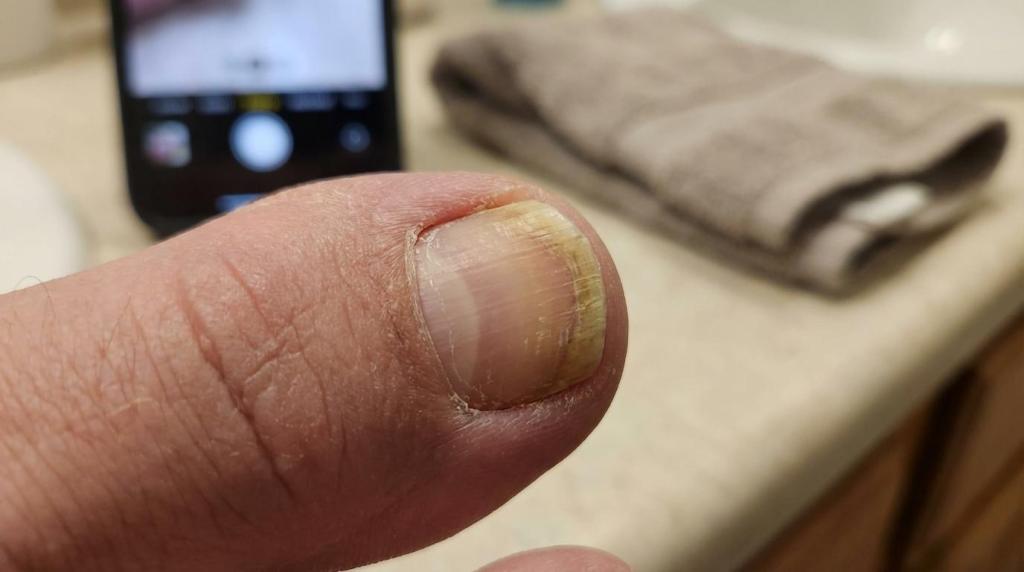
Jublia vs. Oral Medications: Real-World Results for Toenail Fungus
Meta description: Comparing Jublia (efinaconazole) and oral terbinafine for toenail fungus (onychomycosis), with real-world cure rates, safety and monitoring, timelines for nail regrowth, and when STRIDE’s dual-therapy protocol may be a better fit.
Toenail fungus can feel unfairly stubborn. Many people do “everything right,” use a prescription topical for months, and still see thick, yellow, brittle nail that will not grow out normally. If you are weighing Jublia vs oral terbinafine, the most helpful starting point is simple: these treatments work in different ways, and the real-world results often reflect that difference.
Topicals can be a good option for mild cases and for people who cannot take oral antifungals. Oral terbinafine remains the most effective single medication for many moderate-to-severe infections. And for patients who have already tried multiple options, a combined approach (oral plus topical) is often where the best outcomes show up.
What Jublia is (and why results can be limited)
Jublia is the brand name for efinaconazole 10%, a prescription topical solution applied to the affected nail(s). It is designed for mild-to-moderate onychomycosis, generally when nail involvement is limited and the nail matrix is not significantly affected.
In the pivotal 48-week randomized trials that led to approval, complete cure rates were about 15% to 18%. That definition is strict: a clear-looking nail and lab evidence the fungus is gone. Jublia can perform better on “mycologic cure” (negative testing), which has been reported around the low-to-mid 50% range in trials, yet many patients still do not reach a normal-looking nail within the typical study timeline.
A key issue is physics, not effort. Medication has to travel through a thick nail plate to reach fungus that often lives deeper, close to the nail bed and matrix.
After months of use, many patients are left with an experience that sounds like: “The nail looks a little better, but it never fully clears.”
What oral terbinafine is (and why dermatology relies on it)
Oral terbinafine is a systemic antifungal that reaches the nail unit through the bloodstream, then concentrates in keratin as the nail grows. This is a major reason it tends to outperform topical monotherapy when infection is more established.
In head-to-head and comparative studies, terbinafine (250 mg daily) has shown complete cure rates around 46% to 55% at follow-up timepoints around one year. Meta-analyses often rank terbinafine among the most effective options for toenail fungus.
Even when “complete cure” does not happen, many patients still get meaningful improvement: less thickness, less crumbling, and a clearer area growing in from the base.
That said, oral therapy is not a casual choice. Because it is systemic, clinicians screen for medication interactions and health history, and they may order lab work to check liver function.
Jublia vs terbinafine: effectiveness, time, and day-to-day reality
Comparing these options side-by-side helps set realistic expectations.
[markdown]| Category | Jublia (efinaconazole topical) | Oral terbinafine | STRIDE DUO (oral + topical protocol) || --- | --- | --- | --- || Typical use | Daily application to nail | Daily tablets for a defined course (or clinician-directed pulse dosing) | Clinician-supervised oral antifungal + custom-compounded topical || Study-reported complete cure | ~15% to 18% in 48-week RCTs | ~46% to 55% in RCT data (varies by study) | STRIDE reports up to 89% cure rate with dual therapy (program outcomes) || Best fit | Mild cases, limited nail involvement, patients avoiding systemic meds | Moderate-to-severe cases, multiple nails, thicker nails, matrix involvement | Patients who failed OTC or past prescriptions, longer-standing infections, convenience-focused care || Time to visible change | Slow, often months | Slow, often months | Still months (nail must grow out), with structured tracking and support || Main tradeoff | Lower cure rates, long daily routine | Higher cure potential, requires screening and safety monitoring | Higher reported outcomes, coordinated plan, home delivery, money-back guarantee |[/markdown]
Clinical trial results do not always match real life. Daily topical use for close to a year is hard to maintain, and missed doses are common. Oral therapy is shorter, but some people stop early due to side effects or anxiety about safety.
The best plan is the one you can safely follow to completion.
Why Jublia can disappoint outside of “mild” infections
If you have been using Jublia faithfully and feel stuck, it does not mean you did anything wrong. A few patterns show up often in clinical care.
People run into trouble when:
- The nail is too thick for reliable penetration.
- The infection involves the nail matrix (growth center).
- Several nails are infected, raising the fungal burden.
- There is ongoing re-exposure from shoes, socks, locker rooms, or household spread.
- Daily application becomes inconsistent over 48 weeks.
Many patients also expect a topical to “fix what they see” quickly. Toenails grow slowly. Even when fungus is improving, the visible nail can look unchanged for a long stretch.
Safety and monitoring: topical vs oral is a real tradeoff
Jublia is appealing because systemic absorption is minimal. Side effects are usually local, and in labeling the most common reports are application-site reactions (irritation, dermatitis), and issues around the toenail area like ingrown toenail.
Oral terbinafine has a different profile. Many people tolerate it well, yet systemic side effects are possible, including gastrointestinal symptoms, headache, rash, and rare but serious liver injury. This is why clinicians review your medical history and current medications carefully.
After discussing benefits and risks, many clinicians take steps like these to keep treatment as safe as possible:
- Medication review: checking for drug interactions and whether terbinafine is appropriate.
- Baseline labs: liver function testing may be ordered before starting, based on history and clinician judgment.
- Symptom monitoring: stopping medication and contacting a clinician if warning signs appear (dark urine, yellowing skin/eyes, severe fatigue, persistent nausea, widespread rash).
If you have liver disease, certain medication regimens, or other contraindications, a clinician may recommend a different oral antifungal (like fluconazole) or a topical-forward plan.
What to expect: timeline and progress tracking that matches nail biology
Most frustration comes from mismatched expectations. Toenail fungus treatment is slow because the nail has to grow out.
A realistic timeline often looks like this:
- First 4 to 8 weeks: fungus may be weakening, but the nail often looks similar; discomfort from thick nails may improve with trimming and thinning.
- Months 2 to 4: a clearer band may start to appear at the base as new nail grows in.
- Months 6 to 9: the difference becomes obvious for many patients, especially with consistent therapy and prevention habits.
- Months 9 to 12: closer to the “final look” for a big toe in many adults, depending on growth rate and severity.
Here is a practical way to track progress that reduces guesswork:
- Keep monthly photos: same lighting, same distance, same angle.
- Measure the clear growth: even a few millimeters is a win early on.
- Watch the base of the nail: clearing starts at the cuticle area, not at the tip.
A plan that includes structured check-ins can be the difference between staying on track and abandoning treatment too early.
When oral plus topical can make sense (and what STRIDE does differently)
Combination therapy is common in dermatology because it targets fungus from two directions: systemic treatment helps clear infection at the nail bed and matrix, while topical treatment supports the nail surface and may reduce reinfection during grow-out.
STRIDE (by Distinct Dermatology) is built around that combined approach. STRIDE’s flagship protocol, STRIDE DUO, pairs:
- clinician-directed oral antifungal therapy, often using pulse dosing to reduce total exposure while keeping effectiveness, and
- a custom-compounded topical, STRIDE ClearNail Renewal™ (with keratolytics like urea and lactic acid plus terbinafine) designed to improve penetration through thickened nail.
Pulse dosing is not a shortcut. It is a clinician-supervised dosing strategy used in antifungal care that aims to balance strong antifungal activity with a lower side-effect burden for many patients.
STRIDE also highlights high reported outcomes, with up to an 89% cure rate for its dual-therapy program, and backs treatment with a money-back guarantee, which matters when you have already spent time and money cycling through options that did not work.
A patient-friendly decision guide (quick, honest, and practical)
If you are deciding between Jublia and oral terbinafine, think in terms of fit, not willpower.
Here are common “good fit” scenarios:
- Milder infection, one or two nails: Jublia may be reasonable if you can commit to daily application for many months.
- Thicker nails, multiple nails, longer history: oral terbinafine is often the more effective single-agent option when it is medically appropriate.
- Prior failures with OTC or prescriptions: a clinician-guided combination plan may offer the best chance of clearing, especially when the case is advanced.
And here are questions worth bringing to a clinician visit or online evaluation:
- Is the nail matrix involved? This often shifts the plan toward oral therapy.
- Do we have lab confirmation? Nail dystrophy can mimic fungus; testing can prevent months of the wrong treatment.
- What monitoring do I need? Ask what labs and symptom check-ins are recommended for your situation.
- What does success mean for me? Some people want “clear enough for sandals,” others want strict complete cure.
How STRIDE works (100% online) if you want a guided plan
If convenience and privacy matter, teledermatology can remove a lot of friction, especially when you need months of follow-through rather than a single office visit.
STRIDE’s process is designed to be straightforward:
- Share photos and health history through a secure online intake.
- A board-certified clinician reviews your case and recommends a personalized plan (topical-only, oral-only, or dual therapy).
- Medications ship directly to your home in discreet packaging.
- You track progress with ongoing support, including photo check-ins, so adjustments can be made when needed.
If you are tired of guessing whether your toenail fungus treatment is working, it can help to have a clinician-reviewed plan, a clear timeline, and a way to measure progress that matches how nails actually grow.
If you have questions about Jublia vs oral terbinafine, pulse dosing, or whether STRIDE DUO is appropriate for your health history, reach out to STRIDE’s care team for guidance before you invest another six to twelve months in a plan that may not fit your case.
Ready To Cure Toenail Fungus For Good?
- Jeff S.