"The right toe was treated for 20 days with STRIDE™, while the left toe was not. The difference is dramatic. It's incredible to see such visible improvement in such a short period."

Dr. Peter J. Bregman
Podiatrist

STRIDE™ has shown a high success rate, with clinical trials reporting an 89% effectiveness in treating toenail fungus. The science behind the solution and, in particular the STRIDE DUO™ therapy not only aims to eradicate the current infection but also helps prevent recurrence by tackling the fungus both locally and systemically.

Choosing a toenail fungus treatment is not simply about finding an antifungal medication and applying it to the nail. Established fungal infections can be difficult to treat because the infection may be located beneath and within the nail, while the nail itself creates a physical barrier to medication. Treatment also needs to account for the slow growth of toenails and the possibility of recurrence.
This is why the best toenail fungus treatment can vary from one person to another. A clinician may consider the severity of the infection, how many nails are affected, previous treatment attempts, medical history, and whether oral medication is appropriate before recommending a treatment plan.
Topical and oral antifungals reach the infection differently. A topical medication is applied directly to the nail, while an oral antifungal travels through the body and reaches the nail tissue systemically.
STRIDE DUO™ combines these approaches into a top-down + bottom-up protocol. The oral component provides systemic antifungal activity, while STRIDE™ ClearNail Renewal™ is designed to work directly at the nail. The goal is to address the infection through complementary routes rather than relying on only one method.
The topical formula contains urea, lactic acid, terbinafine, and DMSO. Together, these ingredients are designed to support delivery through the nail while providing direct antifungal activity.
STRIDE™ has shown a high success rate, with clinical trials reporting an 89% effectiveness in treating toenail fungus. The science behind the solution and, in particular the STRIDE DUO™ therapyOral terbinafine treatment is an important prescription option for toenail fungus and is commonly used because systemic medication can reach the nail from within. However, oral antifungals are not appropriate for everyone. A licensed clinician should review a patient's medical history, medications, and other relevant factors before prescribing them. not only aims to eradicate the current infection but also helps prevent recurrence by tackling the fungus both locally and systemically.
STRIDE also uses a Smarter Dosing approach for appropriate candidates, based on pulse dosing rather than continuous daily dosing. The STRIDE protocol uses 7 days of treatment followed by approximately 90 days off, allowing terbinafine to persist in nail keratin between dosing cycles. This protocol should be used only when prescribed and supervised by a qualified clinician.
There is no universal antifungal nail treatment for everyone. Some patients can be treated with topical remedy only while some may benefit from using an oral therapy or a mixture of both.
The important first step is determining whether the nail changes are actually caused by fungus and understanding the extent of the infection. From there, a clinician can help determine which treatment approach makes the most sense.
Depending on your preferences and specific circumstances, your physician will prescribe the best toenail fungus treatment option for you.

The treatment combines an oral antifungal, like terbinafine or fluconazole, with STRIDE Clearnail Renewal™ topical solution. Oral medications work from within to disrupt fungal growth, while STRIDE Clearnail Renewal™ targets the infection directly, producing clearer nails in just a few days.
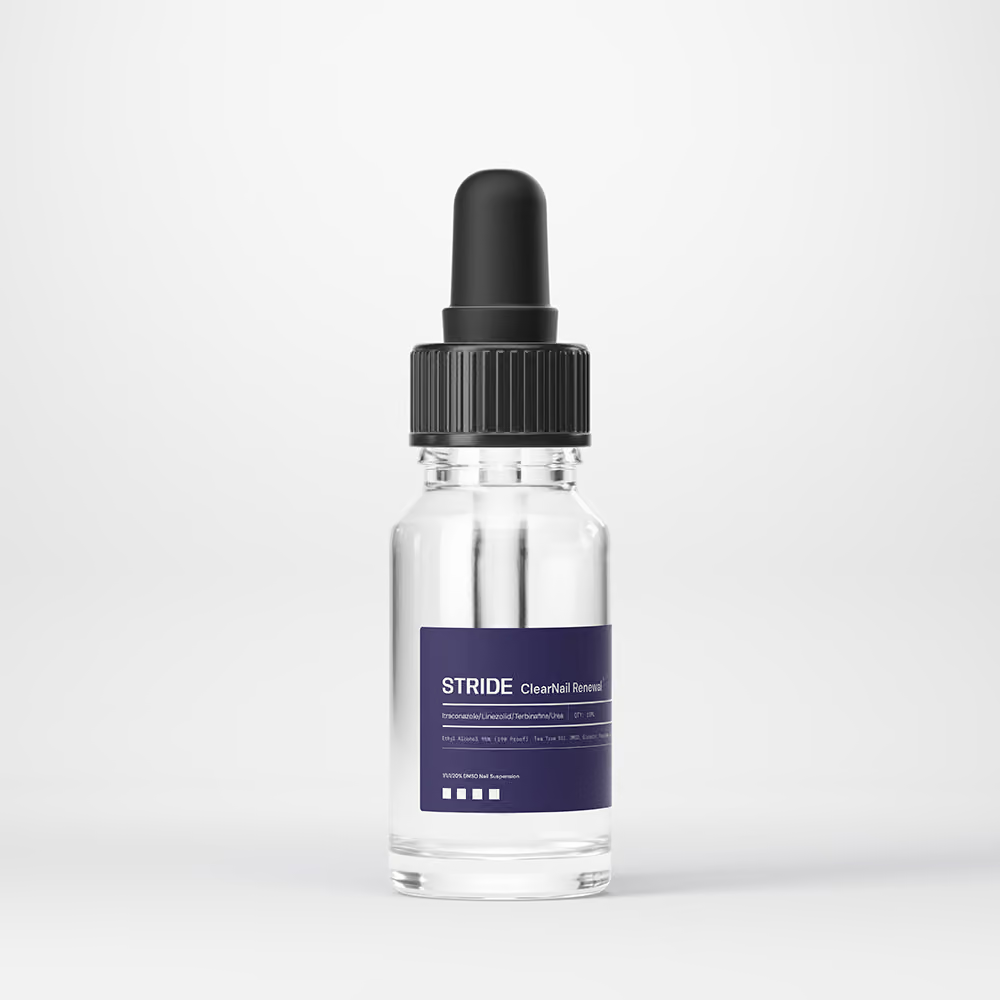
For those who prefer not to take oral medication, we offer STRIDE Clearnail Renewal™ topical solution as a standalone treatment. It’s a powerful option that delivers visible results within days, providing an effective and convenient solution for toenail fungus without the need for systemic medications.
- Jeff S.


STRIDE begins to work internally and externally to fight the infection.
Subtle improvement in appearance

Visible changes become more noticeable.

New, healthy nail growth begins to emerge.

Treatment duration typically lasts 3 to 12 months.
Whether you're a patient, healthcare provider, or simply interested in learning more, this video provides valuable insights into navigating the challenges of toenail fungus. Watch now to empower yourself with knowledge and explore the best approaches for achieving healthy nails!

Bethany Mulhanney

Terbinafine is an allylamine antifungal that works by specifically targeting the enzyme squalene epoxidase, which is crucial for the biosynthesis of ergosterol, an essential component of fungal cell membranes. By inhibiting this enzyme, Terbinafine causes a deficiency in ergosterol and an accumulation of squalene within the fungal cells, leading to fungal cell death. This mode of action is particularly effective against dermatophytes, the most common fungi responsible for nail infections.
Clinical studies have consistently shown high cure rates with Terbinafine, often exceeding 70-90% effectiveness, depending on the duration of treatment and severity of the infection. This high efficacy rate is a compelling reason for its primary use in treatment protocols.
Terbinafine is well-absorbed orally and has excellent tissue penetration, especially into the nails and skin, where it remains for extended periods even after the cessation of treatment. This characteristic ensures ongoing antifungal activity and reduces the total duration of therapy needed to clear the infection.
Compared to other antifungals, fungi develop resistance to Terbinafine less frequently. This lower resistance rate makes it a reliable choice for treatment, especially in areas where fungal infections are prevalent.
Fluconazole serves as an important alternative in the arsenal against toenail fungus, particularly when Terbinafine is not suitable due to medical contraindications or patient preference. Here are several reasons why Fluconazole is chosen as an alternative oral treatment:

Fluconazole belongs to the azole class of antifungals, which are known for their broad-spectrum activity. It works by inhibiting the enzyme lanosterol 14α-demethylase, which is involved in the synthesis of ergosterol, a vital component of fungal cell membranes. This disruption leads to increased membrane permeability and eventual fungal cell death. While it is effective against a wide variety of fungi, it is particularly useful against yeast infections and certain molds, which might coexist with or mimic toenail fungus infections.
Fluconazole is often appreciated for its convenient dosing regimen. Unlike some other antifungals that require daily administration, Fluconazole can be prescribed in a once-weekly dosage, which can improve patient compliance and convenience, especially in long-term treatments necessary for clearing nail fungus.
Patients who experience or are at risk of severe side effects from Terbinafine, such as those with liver issues or who have had adverse reactions to allylamine antifungals, may find Fluconazole a safer alternative. Its different mechanism and metabolic pathway mean it often presents a different side effect profile.
In cases where fungal strains have developed resistance to other treatments, Fluconazole may still prove effective. This makes it a valuable option for treating difficult cases where first-line treatments have failed.
Both our primary treatment (oral+topical) as well as our topical-only therapy includes our latest topical formulation which provides a 1-2 punch to toenail fungus when paired with our oral prescriptions. With STRIDE ClearNail Renewal™, patients see visible improvements in as little as a week.



Not all toenail fungus treatments are created equal. STRIDE™ stands out with its unique dual-action approach that targets the fungus at its source, both externally and internally. Backed by scientific research and clinical success, STRIDE™ outperforms popular over-the-counter products and other prescriptions. Compare the science and results to understand why STRIDE™ is the clear choice for long-term nail health.

Real patient testimonials provide insight into the effectiveness of STRIDE™. Learn how our scientifically-backed treatments have helped others overcome toenail fungus. Interested in seeing more?

Toenail fungus is a common yet challenging condition that requires thoughtful consideration of treatment strategies. At STRIDE™, we are committed to providing our patients with effective solutions tailored to their specific needs and health circumstances. For a little more than a $1 a day, STRIDE™ is the most effective toenail fungus prescription treatment available entirely online with no appointment scheduling required. With visible results in just a few days!
For those who opt for the most robust approach, our STRIDE DUO™ therapy includes an oral medication paired with our STRIDE ClearNail Renewal™ topical solution. This method maximizes the eradication of the fungus by attacking it both systemically and locally, enhancing nail penetration, promoting faster healing, and improving the overall health of the nail.
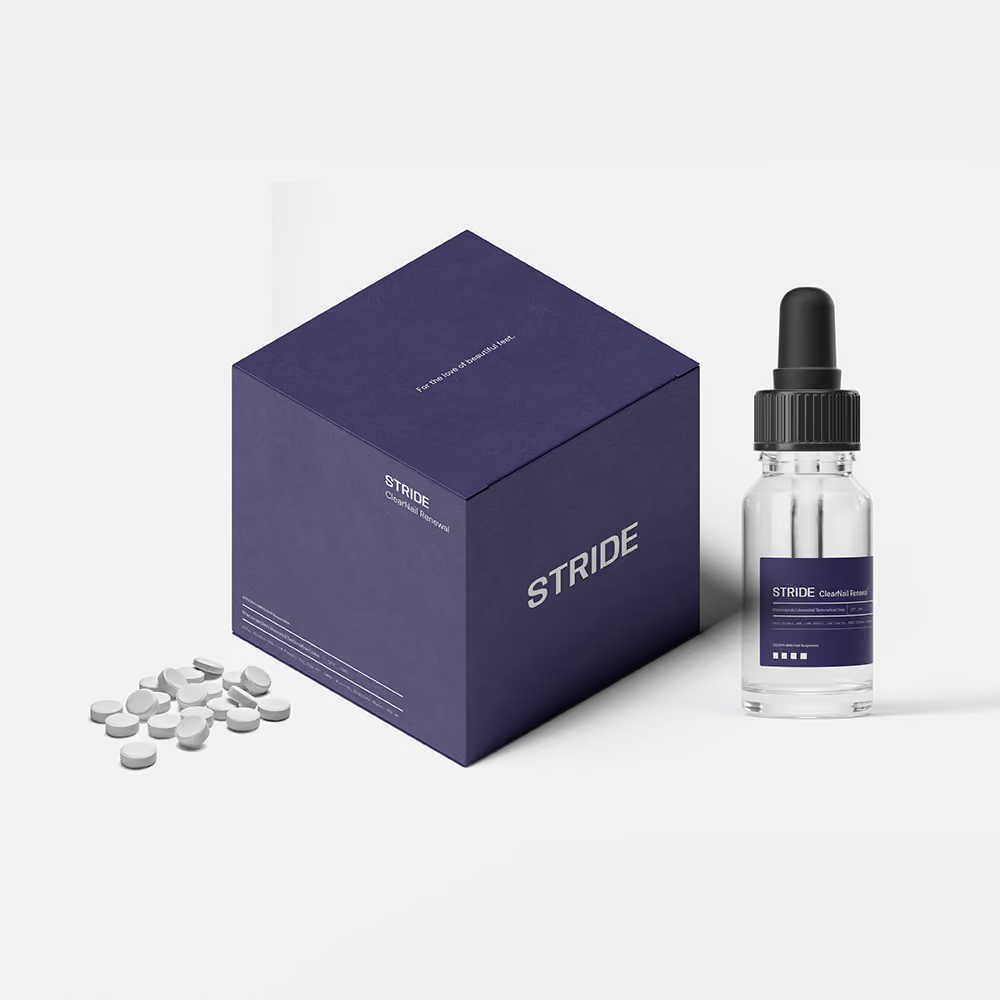
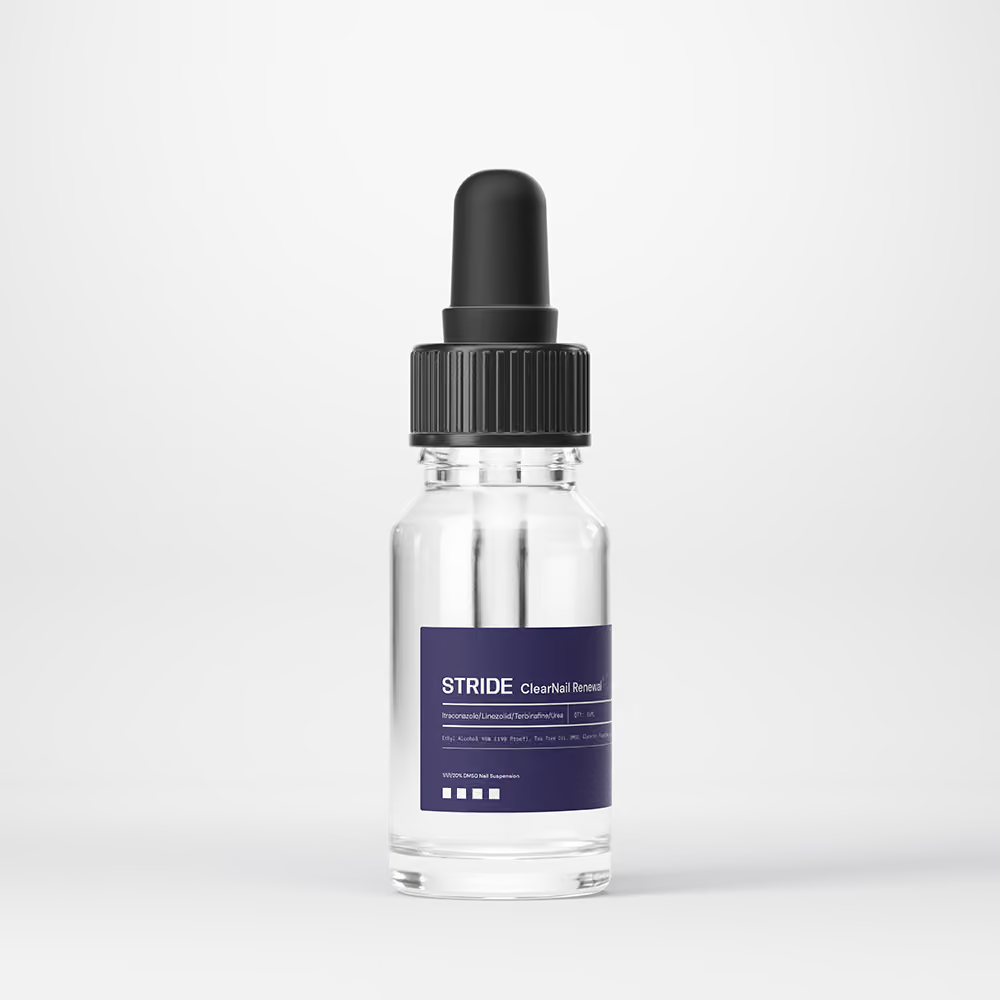
Our STRIDE SOLO™ therapy focuses on directly combating the fungus at the source with a potent formulation designed to penetrate deeply into the nail bed. Each option is supported by scientific understanding and clinical research, ensuring that you receive a treatment that not only addresses the fungal infection but also suits your personal health profile and preferences.

"The right toe was treated for 20 days with STRIDE™, while the left toe was not. The difference is dramatic. It's incredible to see such visible improvement in such a short period."
Dr. Peter J. Bregman
Each option is supported by scientific understanding and clinical research, ensuring that you receive a treatment that not only addresses the fungal infection but also suits your personal health profile and preferences.


Samantha B.
Anchorage, AK
Oral terbinafine treatment for toenail fungus typically lasts about 12 weeks. The drug stays in the nail long after the course ends, but visible clearance depends on nail regrowth. Most people see a fully clear nail within 9 to 18 months as healthy nails replace damaged tissue.
Yes. Oral terbinafine is considered one of the best toenail fungus treatments, with clinical studies reporting cure rates of 70% to 90% depending on severity and treatment length. It works systemically, reaching the nail bed from within, and fungi rarely develops resistance to it.
STRIDE DUO™ is a two-part toenail fungus treatment that combines a prescription oral antifungal, such as terbinafine or fluconazole, with STRIDE ClearNail Renewal™ topical to attack fungus from inside and outside. STRIDE SOLO™ uses the topical alone, for those avoiding oral medication. Your physician recommends the best fit.
No. Oral terbinafine treatment is STRIDE's primary option, but physicians may prescribe fluconazole when terbinafine isn't suitable, such as for patients with liver concerns, prior reactions, or resistant infections. Fluconazole is often taken once weekly, which many patients find convenient for long-term treatment.
Most antifungal nail treatments show early changes within 4 to 8 weeks, including reduced discoloration and smoother texture. With STRIDE ClearNail Renewal™, some patients notice visible improvement within a week. Full results take longer, usually 3 to 12 months, because the damaged nail must grow completely.