
Do Toenail Fungus Treatments Really Work? Here's What You Should Know Before You Spend Your Money
Key Takeaways
Not all toenail fungus treatments are equally effective. The best treatment depends on how advanced the infection has become.
Many over-the-counter products improve the appearance of the nail but struggle to reach fungus living beneath the nail plate.
Prescription oral antifungal medications remain the standard treatment for moderate to severe toenail fungus.
Combining an oral antifungal with a penetrating topical solution often provides the best chance of long-term success.
Even after the fungus is eliminated, healthy nails take months to grow back.
Introduction
If you've searched online for a toenail fungus treatment, you've probably come across dozens of creams, liquids, oils, lasers, and home remedies claiming to eliminate nail fungus quickly. Unfortunately, many people spend months or even years trying product after product without seeing lasting improvement.
So, do toenail fungus treatments actually work?
The short answer is yes, but success depends on choosing the right treatment for the type and severity of your infection.
At STRIDE, we've treated thousands of patient intakes from people struggling with onychomycosis (toenail fungus). One pattern stands out: most patients don't fail treatment because toenail fungus is impossible to cure, they fail because the treatment they chose never had a realistic chance of reaching the infection in the first place.
Why Some Toenail Fungus Treatments Work Better Than Others
One of the biggest misconceptions about toenail fungus is that the infection sits on the surface of the nail.
It usually doesn't.
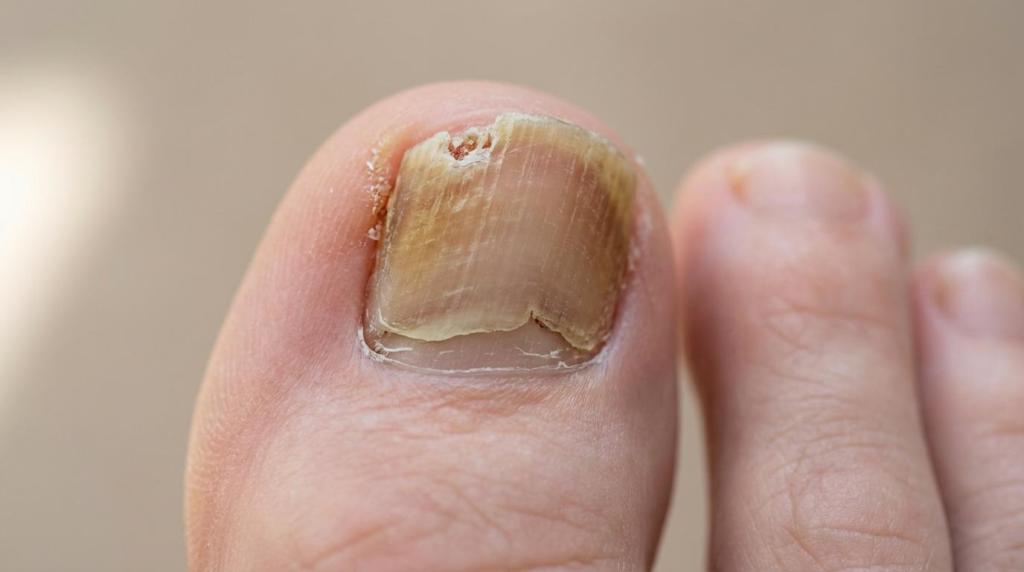
In most cases, the fungus lives beneath the nail plate and gradually spreads deeper into the nail over time. As the infection progresses, the nail often becomes thicker, discolored, brittle, and increasingly difficult for medications applied to the surface to penetrate.
That's one reason many over-the-counter products don’t usually work.
Most work by improving the appearance of the nail or help treat fungal infections of the surrounding skin, but once the fungus is established beneath the nail, many topical treatments simply can't deliver enough medication where it's needed.
The American Academy of Family Physicians recommends oral terbinafine as the preferred first-line treatment for most patients because it consistently performs better than topical therapy alone in clinical studies.
---
Why Oral Medication Doesn't Always Produce a Complete Cure
Prescription oral antifungal medications work differently than topical treatments.
Instead of trying to penetrate through the nail, they travel through the bloodstream and are incorporated into the growing nail, allowing the medication to reach the fungus from underneath.
That approach is much more effective for established infections.
Clinical trials have reported impressive cure rates with oral terbinafine (50-74% mycologic cure rates depending on the study). However, those studies are conducted under carefully controlled conditions using highly selected patients who receive close follow-up throughout treatment.
Real life tends to look differently.
Many patients initially start with some over the counter treatment that they picked up at the local pharmacy and delay an effective treatment for years. By the time they seek medical care, they often have thickened nails, multiple infected toenails, slower nail growth etc. These factors all make the infection more difficult to treat and eliminate.
As a result, the success rates seen in everyday clinical practice are often lower than those reported in clinical trials. That's one reason many dermatologists recommend combination therapy for patients with moderate or advanced infections.
---
Why Combination Therapy Makes Sense
Toenail fungus doesn't attack from just one direction, so treating it from only one direction isn't always enough.
Oral medication reaches the fungus from inside the nail as new healthy nail grows. A penetrating topical solution works on the nail surface and surrounding tissue where fungal organisms may also be present.
Together, these approaches complement each other.
Research has consistently shown that combination therapy generally performs better than topical treatment alone, particularly in more advanced infections.
That's the philosophy behind STRIDE DUO™, which combines pulse-dose oral terbinafine with STRIDE ClearNail Renewal™, a compounded topical solution formulated to improve penetration through the nail plate.
---
The Biggest Mistake We See Patients Make
One of the most common misconceptions we hear is:
"I've been using the medication for two months, but my nail still looks infected."
In most cases, that's completely normal, with the new healthy nail taking a while to grow out
The medication stops the infection first. After that, your body still has to grow an entirely new nail to replace the damaged one.
Since toenails grow slowly, typically only one to two millimeters per month visible improvement requires patience.
Many patients begin seeing healthy nail growth near the cuticle within 8 to 12 weeks, while complete replacement of the damaged nail often takes 9 to 12 months or longer.
---
Preventing Reinfection Is Just as Important as Treatment
Eliminating the fungus from the nail is only part of the process.
One of the most overlooked reasons toenail fungus returns is reinfection.
Fungal spores can survive inside shoes, on socks, in damp shower environments, or continue spreading from untreated athlete's foot.
We routinely encourage patients to think beyond the nail itself by:
· Treating shoes with an antifungal spray or powder.
· Treating athlete's foot at the same time, if present.
· Keeping feet clean and dry.
· Trimming thickened nails regularly.
· Completing the full treatment plan, even after the nail begins looking healthier.
These simple steps can significantly reduce the likelihood of recurrence.
---
What Should You Expect During Treatment?
Understanding the timeline helps set realistic expectations.
Weeks 1–4 The medication begins working against the fungus, although the nail may look unchanged. This doesn't mean treatment isn't working.
Weeks 8–12 Many patients notice a thin band of healthy nail beginning to grow from the base of the nail. This is often the first visible sign of improvement.
Months 3–6 As the nail continues to grow, healthy nail gradually replaces the damaged portion. Discoloration and thickening slowly begin to improve.
Months 9–12 For many patients, most of the damaged nail has grown out. Severe infections or slower-growing nails may require additional treatment or more time before the nail appears completely normal.
The key to success isn't finding the fastest treatment—it's staying consistent long enough for healthy nail to replace damaged nail.
The Bottom Line
So, do toenail fungus treatments really work?
Yes but choosing the right treatment makes all the difference.
Mild infections may respond to topical therapy alone, while moderate to severe infections often require prescription medication. Oral antifungals remain the standard of care because they can reach the fungus from within the growing nail, and combining oral therapy with a penetrating topical solution may further improve outcomes in appropriate patients.
At STRIDE, we've learned that successful treatment involves more than prescribing medication. Setting realistic expectations, encouraging consistent treatment, and helping patients prevent reinfection are just as important as the medication itself.
Toenail fungus develops slowly, and it takes time to reverse the damage. But with the right treatment plan—and a little patience—healthy nails can grow back.
Ready To Cure Toenail Fungus For Good?
- Jeff S.