
Kerydin Alternatives: Other Toenail Fungus Options
Key Takeaways
Early signs oftoenail fungus may include discoloration, changes in texture, thickening, debris beneath the nail, and nail separation. Signs of toenail fungus may include discoloration, changes in texture, thickening, debrisbeneath the nail, and nail separation; some occur as the infection progresses.
Onychomycosis can resemble other nail conditions, sopersistent changes should be evaluated rather than self-diagnosed.
Prescription oral andtopical antifungal medications may be more effective than over-the-counterproducts for established infections, depending on the extent of the condition.Prescriptionantifungal treatment has stronger clinical evidence for establishedonychomycosis than most over-the-counter approaches, with the appropriatetreatment depending on the diagnosis and extent of infection.
STRIDE DUO™ combines prescription oral and topical treatment through a top-down + bottom-up approach designed to address multiple barriers to treatment.STRIDEDUO™ combines prescription oral terbinafine with ClearNail Renewal™ topical treatment in a complementary oral + topical approach.
Online clinician access can make it easier to determinewhether prescription treatment may be appropriate.
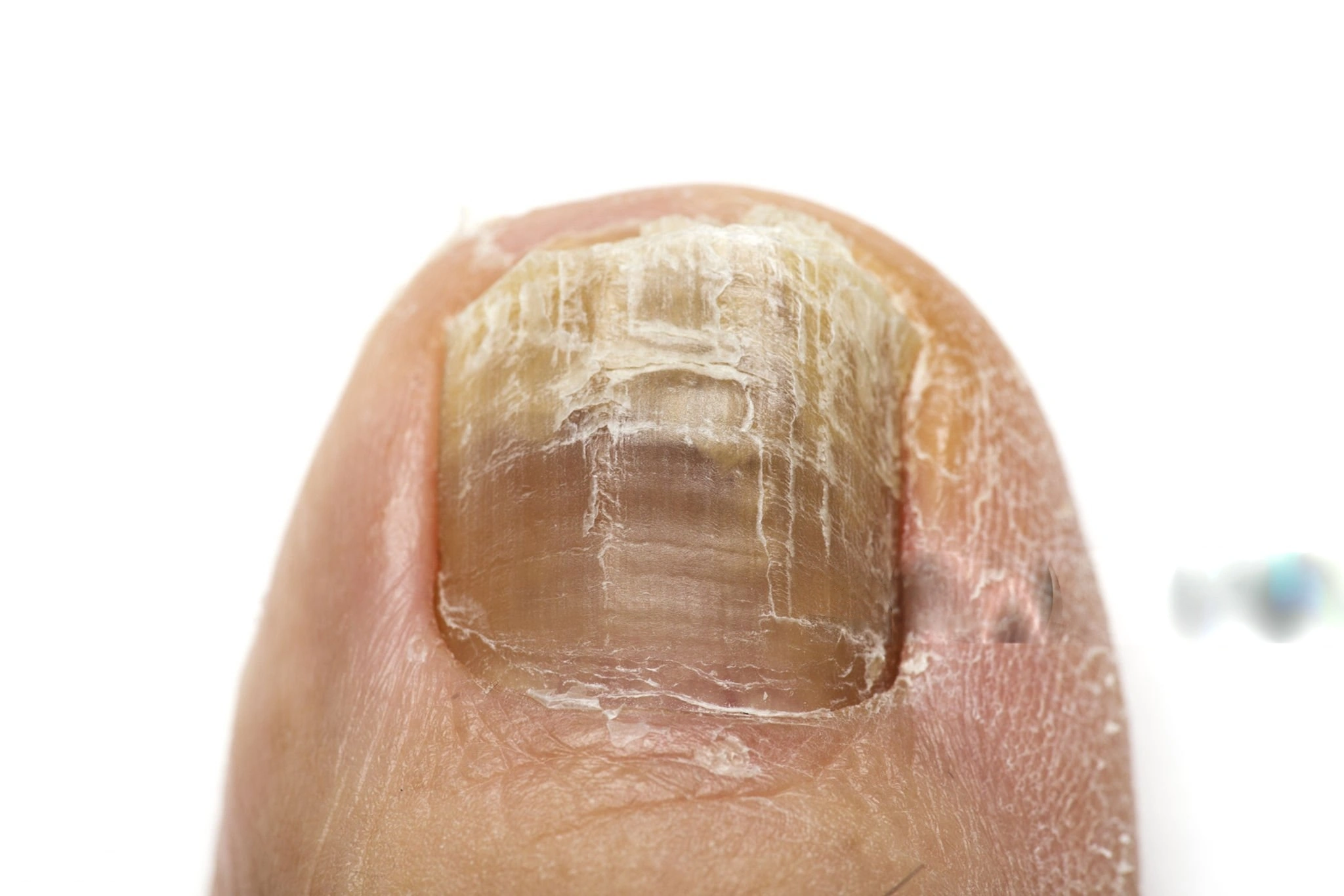
Toenail fungus, medically known as onychomycosis, often begins with changes that are easy to overlook. A small patch of discoloration, a slightly rough edge, or a nail that no longer looks as clear as usual mayseem like a cosmetic issue rather than a medical concern. However, fungalinfections can progress over time, affecting more of the nail and potentiallybecoming more difficult to manage.
Recognizing the early signs of toenail fungus doesnot mean self-diagnosing. Trauma, psoriasis, and other nail disorders can causesimilar changes. Still, knowing what to watch for can help you decide when apersistent nail problem deserves clinical evaluation.
1. White or Yellow Spots on the Nail
One of the most common early symptoms of nail fungusis a small white, yellow, or yellow-brown area on the nail. The discolorationmay begin near the tip or along one side and gradually spread as more of thenail becomes involved.
A discolored nail does not automatically indicate afungal infection. Injury, repeated pressure from footwear, and certain skinconditions can also affect nail color. However, discoloration that persists orgradually expands should not simply be covered with nail polish and ignored.
A clinician can evaluate whether the change is consistentwith onychomycosis and determine whether further testing or treatment isappropriate.
2. A Dull or Cloudy Appearance
Healthy nails are generally smooth and relativelytranslucent. During the beginning stages of toenail fungus, the nail maygradually lose that appearance and become dull, cloudy, or opaque.
This change may be subtle at first and affect only asmall portion of one nail. Because it often develops gradually, it can be easyto dismiss. If the nail continues to lose its normal appearance or the changespreads, however, an evaluation can help identify the underlying cause.
3. Thickening of the Toenail
Toenail thickening is another common sign ofonychomycosis. As the infection progresses, the nail may become harder to trimand more uncomfortable inside shoes.
Thickening can also create a treatment challenge. Thenail plate contains dense keratin, which can limit how effectively a productapplied to the surface reaches an infection beneath or within the nail. This isone reason treatment decisions may depend on how much of the nail is involvedand whether the infection extends to the nail matrix.
Prescription treatment may offer advantages inappropriate cases because oral medication reaches the nail through systemiccirculation rather than relying entirely on topical penetration.Forappropriate patients, oral antifungal treatment has the advantage of reachingthe nail through systemic circulation rather than relying entirely onpenetration through the nail plate.
4. A Brittle, Crumbly, or Rough Texture
Fungal infection can also change the nail's texture. Thenail may become brittle, rough, uneven, or crumbly, particularly around theedges. Small pieces may break away more easily than before.
These changes are not unique to toenail fungus, which iswhy appearance alone cannot always confirm a diagnosis. Persistent texturechanges should be assessed in the context of other symptoms, such asdiscoloration, thickening, or debris beneath the nail.
When appropriate, a clinician may recommend testingbefore prescribing oralantifungal medication, helping ensure that treatment is directed at the actualcause of the nail changes.
5. Debris Building Up Under the Nail
Onychomycosis can cause material to accumulate beneaththe nail. You may notice debris under the nail or an increasingly thickenedappearance as material builds up between the nail plate and the underlyingtissue.
This buildup may also make the nail more difficult totrim or contribute to pressure inside footwear. It is best to avoidaggressively digging beneath the nail, as unnecessary trauma can further damagethe area.
If debris continues to accumulate alongside other nailchanges, a clinical evaluation can help determine whether a fungal infection isresponsible.
6. The Nail Beginning to Lift or Separate
Partial separation of the nail from the nail bed, knownas onycholysis, can occur with toenail fungus. It may begin as a small areanear the edge of the nail and become more noticeable over time.
However, onycholysis is not specific to fungal infections. Trauma,psoriasis, repeated pressure, and other conditions can also cause the nail toseparate. This is another reason persistent changes should be evaluated insteadof assuming that every thickened or lifted nail is caused by fungus.
7. Changes That Persist or Spread to OtherNails
A single nail change may result from an injury ortemporary irritation. Persistent changes, however, deserve more attention. Ifdiscoloration, thickening, brittleness, or separation continues to worsen orbegins affecting additional nails, a fungal infection becomes one possibleexplanation.
Onychomycosis can progress when it is not effectivelytreated, and recurrence can also occur after treatment. Toenail fungus canrecur even after successful treatment. Published evidence has reportedrecurrence or relapse in a substantial proportion of patients, highlighting theimportance of completing treatment and following prevention measures.
Recognizing symptoms early creates an opportunity to seekan accurate diagnosis and discuss treatment before the infection affects alarger portion of the nail.
The STRIDE DUO™ Top-Down + Bottom-Up ApproachTheSTRIDE DUO™ Oral + Topical Approach
Treating toenail fungus can be challenging because theinfection may involve different parts of the nail. The nail plate itself canalso make it difficult for topical medication to reach the affected tissue.
STRIDE DUO™ combines prescription oral and topicalantifungal treatment through a top-down + bottom-up approach. The oralcomponent works systemically, while STRIDE™ ClearNail Renewal™ is applieddirectly to the affected nail.
The topical formulation contains Urea, Lactic Acid,Terbinafine, and DMSO. Together, the oral and topical components areintended to provide complementary treatment approaches rather than relying onsurface application alone.
When Should You Seek Treatment?
Consider a clinical evaluation if nail changes persist,worsen, spread to other nails, or begin causing discomfort. Because severalconditions can resemble toenail fungus, an accurate assessment is importantbefore starting prescription medication.
For eligible patients, STRIDE provides access to anonline clinical consultation, allowing a licensed provider to review symptomsand determine whether prescription treatment may be appropriate.Foreligible patients, STRIDE provides an online clinical evaluation in which alicensed provider reviews the patient's medical information and determineswhether prescription treatment is appropriate.
FAQs
1. What is usually the first sign of toenailfungus?
One of the earliest signs may be a small white, yellow,or yellow-brown area on the nail. However, discoloration alone does not confirma fungal infection, as trauma and other nail conditions can cause similarchanges.
2. What do the beginning stages of toenailfungus look like?
The beginning stages of toenail fungus may include subtlediscoloration, a dull appearance, rough texture, or early thickening. Overtime, the nail may become more brittle, thickened, or separated from the nailbed.
3. Can toenail fungus start in just one nail?
Yes. A fungal infection may initially affect one toenailand later involve additional nails. Persistent or worsening changes should beevaluated because not every abnormal nail is caused by fungus.
4. How quickly does toenail fungus progress?
Progression varies depending on the type and extent ofthe infection and individual factors. Because toenails grow slowly, visiblechanges may develop gradually and can continue to worsen without effectivetreatment.
5. Can early toenail fungus be treated withprescription medication?
Prescription treatment may be appropriate depending onthe confirmed diagnosis and extent of the infection. A clinician can determinewhether topical medication, oral treatment, or a combination approach issuitable.
Ready To Cure Toenail Fungus For Good?
- Jeff S.